Samsung Electronics Showcases Innovations at Memory Tech Day
Samsung Electronics Co., Ltd., a global leader in advanced memory technology, recently hosted its annual Memory Tech Day. The event highlighted industry-first innovations and new memory products that will drive technological advancements in various applications, including cloud computing, edge devices, and automotive vehicles.
With approximately 600 attendees, including customers, partners, and industry experts, the event served as a platform for Samsung executives to discuss the company's vision for "Memory Reimagined." They shared long-term plans to maintain their leadership in memory technology, insights into market trends, and sustainability goals. Samsung also unveiled new product innovations such as the HBM3E Shinebolt, LPDDR5X CAMM2, and Detachable AutoSSD.
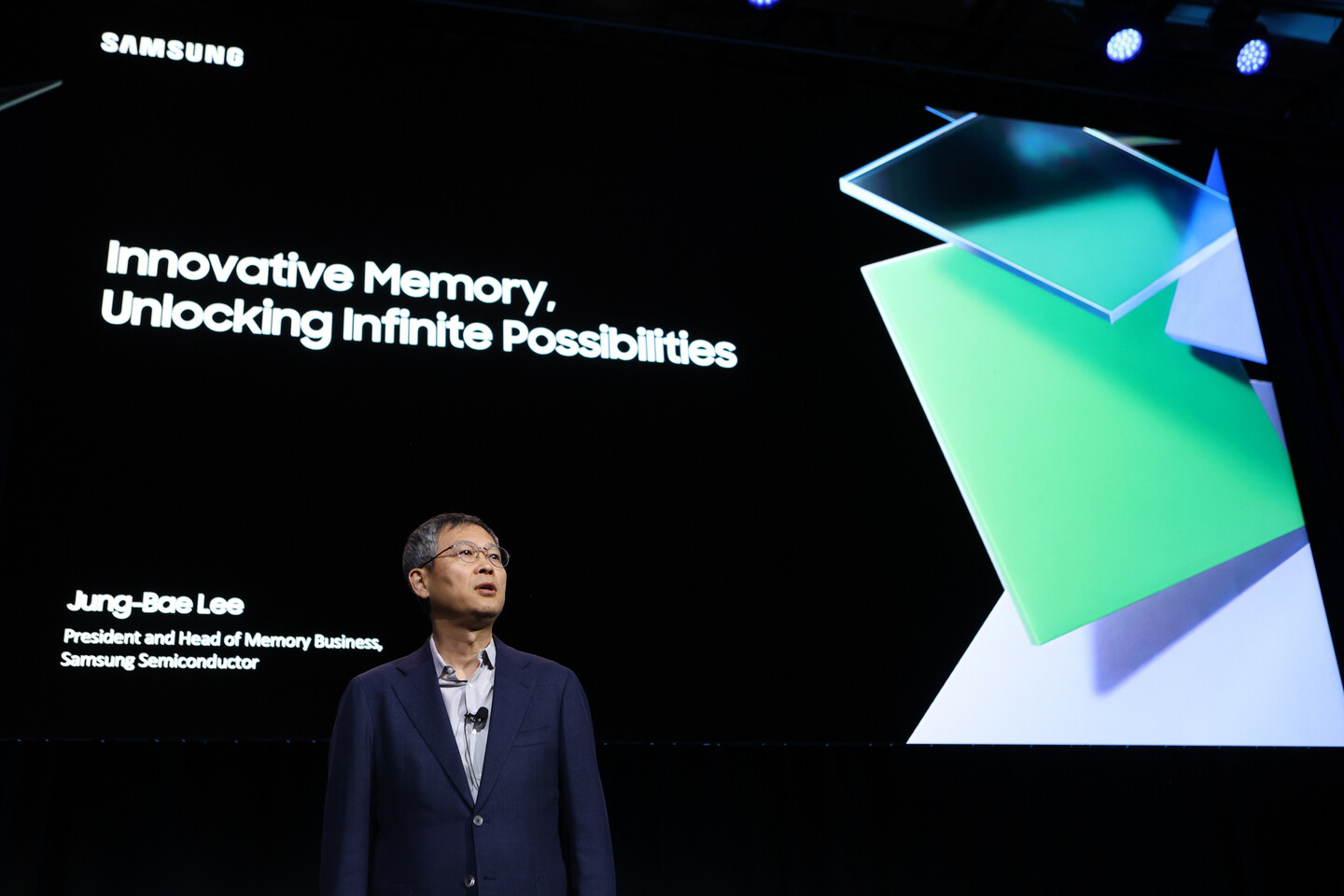
Jung-Bae Lee, President and Head of Memory Business at Samsung Electronics, delivered a keynote address, elaborating on how Samsung plans to overcome the challenges of the hyperscale era through innovations in transistor structures and materials. For instance, Samsung is developing new 3D structures for sub-10-nanometer (nm) DRAM, enabling larger single-chip capacities exceeding 100 gigabits (Gb). Following the successful mass production of their 12 nm-class DRAM in May 2023, Samsung is now working on their next-generation 11 nm-class DRAM, which will offer the highest density in the industry.
Samsung is also making significant progress in NAND flash technology, aiming to shrink cell sizes and refine channel hole etching techniques. Their goal is to introduce 1,000-layer vertical NAND (V-NAND). The company is on track to provide the industry's highest layer count with their ninth-generation V-NAND, based on a double-stack structure. Samsung has already secured a functional chip for the new V-NAND and plans to begin mass production in early 2022.
Lee stated, "The new era of hyperscale AI has brought the industry to a crossroads where innovation and opportunity intersect, presenting a time with potential for great leaps forward, despite the challenges. Through endless imagination and relentless perseverance, we will continue our market leadership by driving innovation and collaborating with customers and partners to deliver solutions that expand possibilities."
Introducing HBM3E 'Shinebolt'
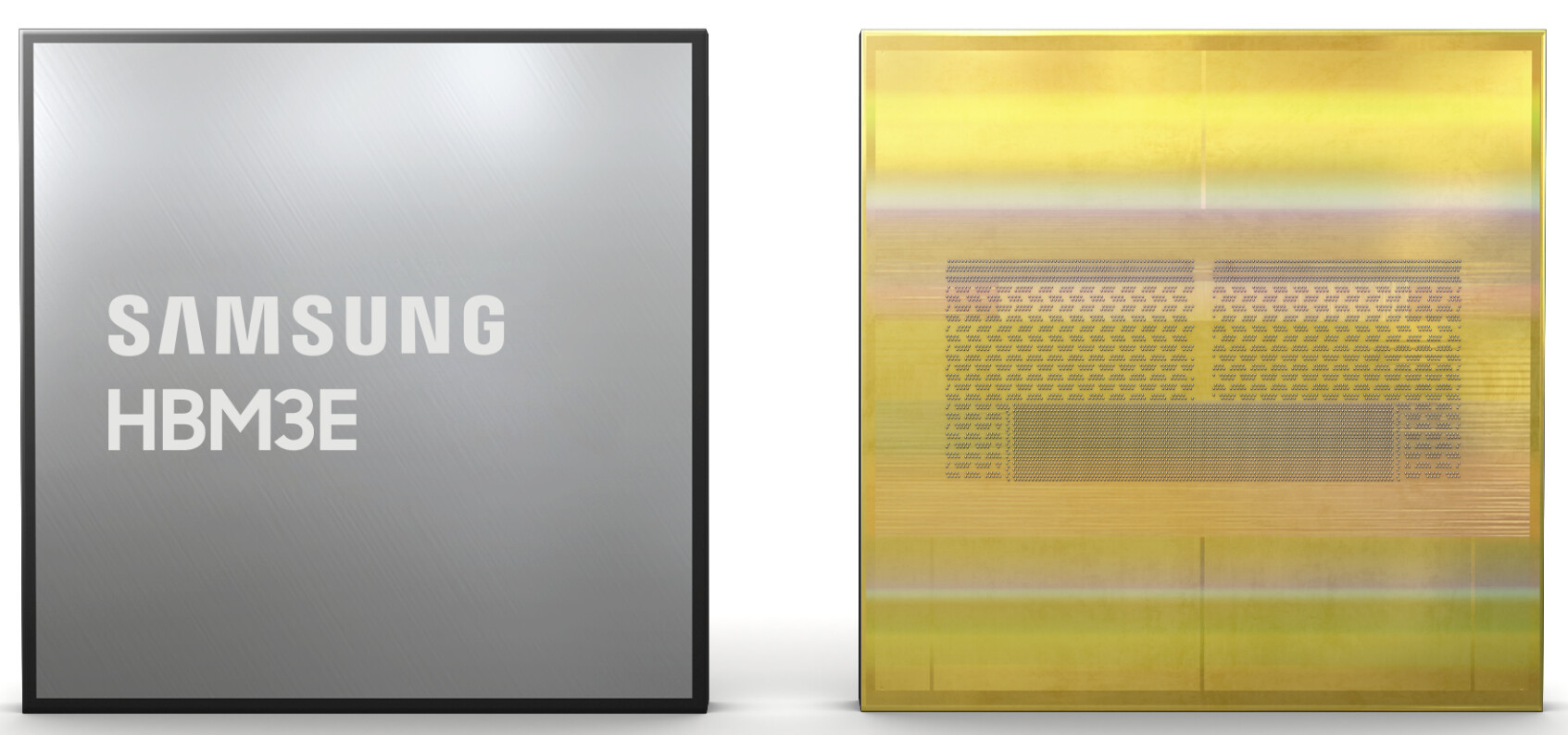
As cloud systems evolve to optimize compute resources, high-performance memory is crucial to handle high capacity, bandwidth, and virtual storage capabilities. Building on their expertise in HBM2, Samsung introduced their next-generation HBM3E DRAM, named Shinebolt. Shinebolt will power next-generation AI applications, improving total cost of ownership (TCO) and accelerating AI-model training and inference in data centers. With an impressive speed of 9.8 gigabits-per-second (Gbps) per pin, the HBM3E can achieve transfer rates exceeding 1.2 terabytes-per-second (TBps).
Samsung has optimized their non-conductive film (NCF) technology to eliminate gaps between chip layers and maximize thermal conductivity, enabling higher layer stacks and improved thermal characteristics. The company is currently mass producing their 8H and 12H HBM3 products, and samples for Shinebolt are already shipping to customers. Samsung plans to offer a custom turnkey service that combines next-generation HBM, advanced packaging technologies, and foundry offerings.
Other notable products showcased at the event include the 32Gb DDR5 DRAM with the highest capacity in the industry, the industry's first 32 Gbps GDDR7, and the petabyte-scale PBSSD, which significantly boosts storage capabilities for server applications.
Redefining Edge Devices Through Powerful Form Factors
To handle data-intensive tasks, AI technologies are moving towards a hybrid model that distributes workload between cloud and edge devices. Samsung introduced a range of memory solutions that support high-performance, high-capacity, low-power, and small form factors at the edge. They unveiled the industry's first 7.5 Gbps LPDDR5X CAMM2, which is expected to revolutionize the next-generation PC and laptop DRAM market. Additionally, Samsung showcased their 9.6 Gbps LPDDR5X DRAM, LLW DRAM specialized for on-device AI, next-generation Universal Flash Storage (UFS), and the high-capacity Quad-Level Cell (QLC) SSD BM9C1 for PCs.
Paving the Road for Automotive Memory Solutions Leadership
With advancements in autonomous driving solutions, there is a growing demand for high-bandwidth, high-capacity DRAM and Shared SSDs that can share data with multiple System on Chips (SoCs). Samsung presented their Detachable AutoSSD, which enables data access from a single SSD to multiple SoCs through virtual storage. The Detachable AutoSSD supports sequential read speeds of up to 6,500 megabytes-per-second (MBps) with a capacity of 4 TB. Its detachable form factor makes upgrades and adjustments easier for vehicle users and manufacturers. Samsung also displayed automotive memory solutions such as high-bandwidth GDDR7 and LPDDR5X with a more compact package size.
Technology That Makes Technology Sustainable
As part of their commitment to minimizing environmental impact, Samsung highlighted various innovations within their semiconductor operations that contribute to increased energy efficiency for customers and consumers. The company plans to develop ultra-low-power memory technologies that reduce power consumption in data centers, PCs, and mobile devices. They also aim to use recycled materials in portable SSD products to reduce their carbon footprint. Samsung's next-generation solutions, including the PBSSD, will help reduce energy usage for server systems by maximizing space efficiency and rack capacity.
Through collaboration with stakeholders across the semiconductor value chain, including customers and partners, Samsung's semiconductor business will continue to play an active role in addressing global climate issues through their sustainability initiative, "technology that makes technology sustainable."