New AMD Medusa Point APU Surfaces in Geekbench Leak
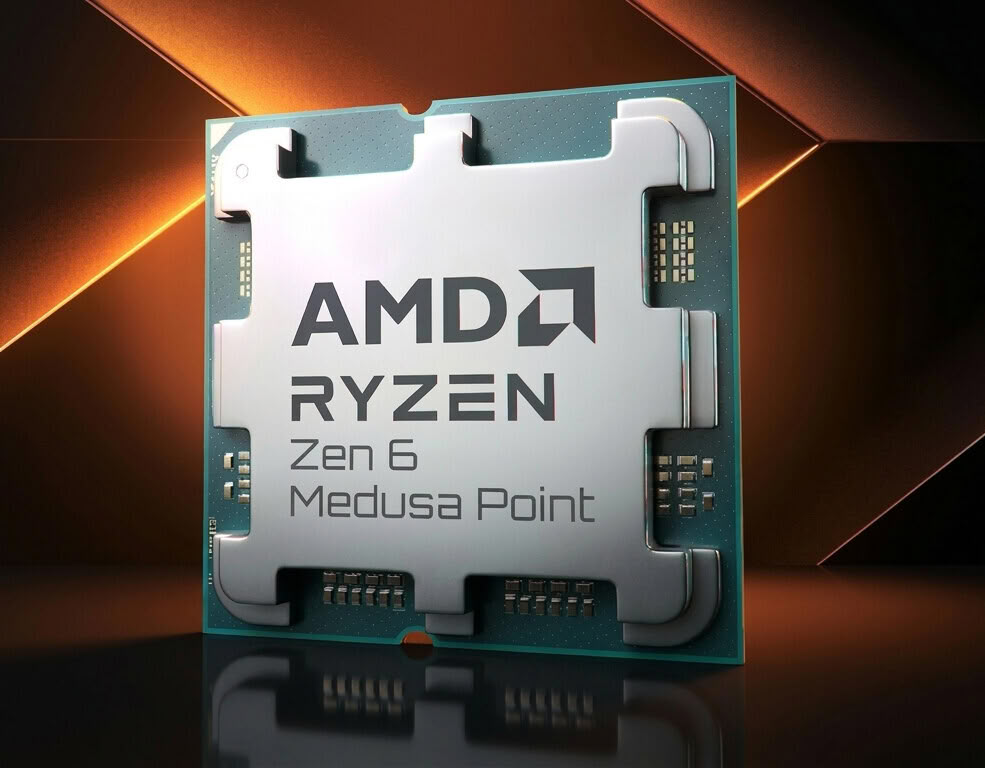
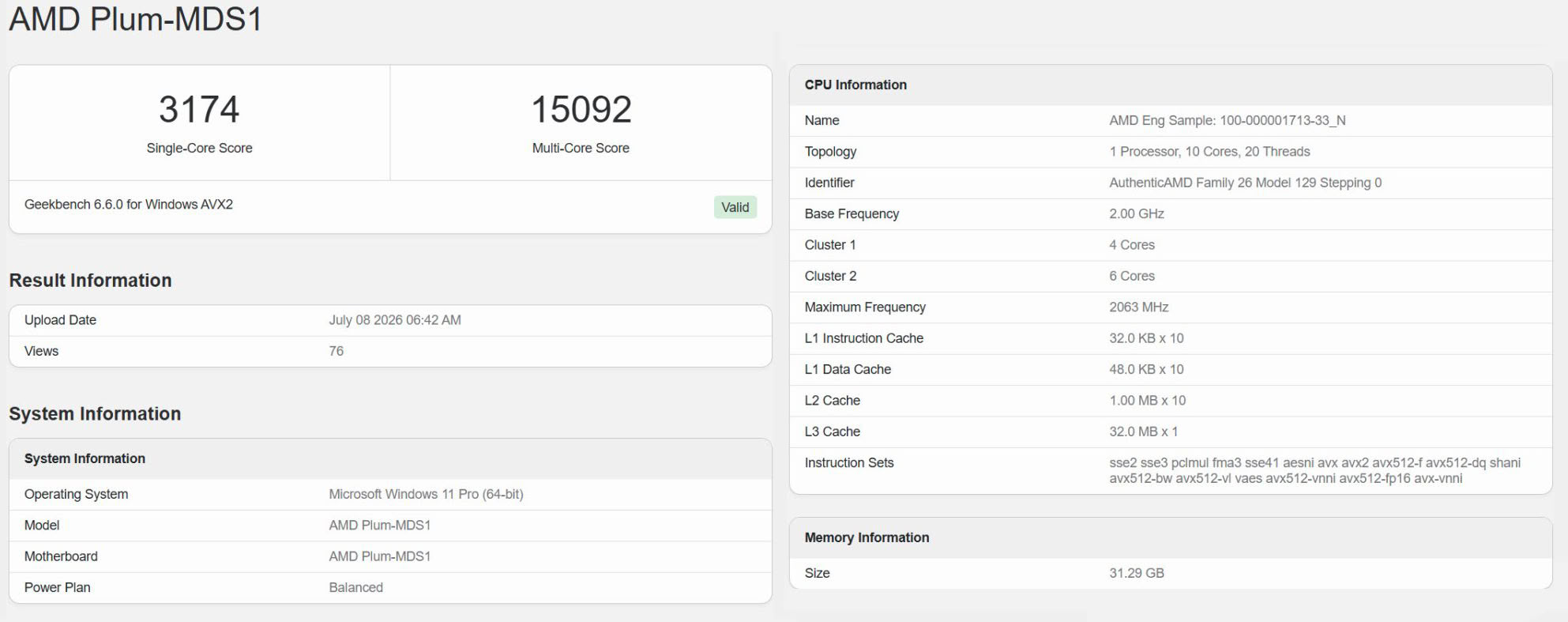
A fresh Geekbench listing has revealed more details about AMD’s upcoming Medusa Point APU, thanks to a discovery by prominent hardware leaker HXL. The latest benchmark submission, identified as 100-000001713-33_N and running on the Plum-MDS1 FP10 platform, showcases notable performance improvements over previous leaks, even though the chip was operating at just over 2.0 GHz.
Ryzen 9 Medusa Point: 10 Cores, Impressive Early Performance
The tested processor is labeled as a Ryzen 9 model, featuring 10 cores and 20 threads, with 10 MB of L2 cache and 32 MB of L3 cache—though the L3 figure may be inaccurately reported. The core configuration is believed to follow a 4+6 layout based on AMD’s next-generation Zen 6 architecture.
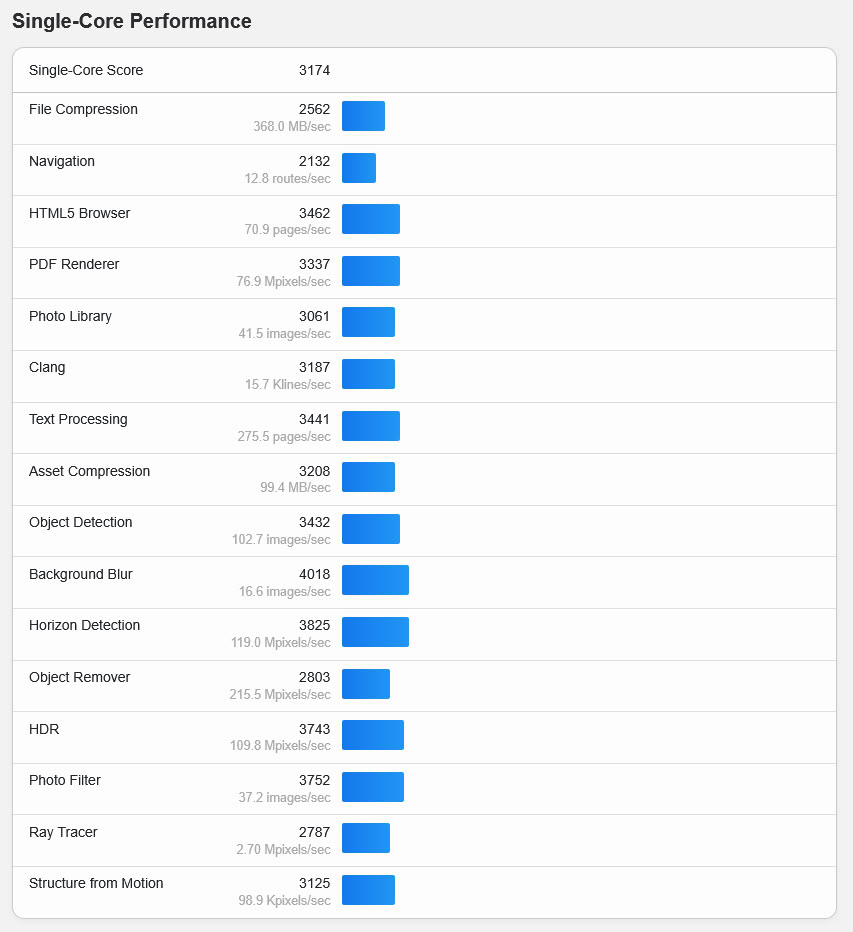
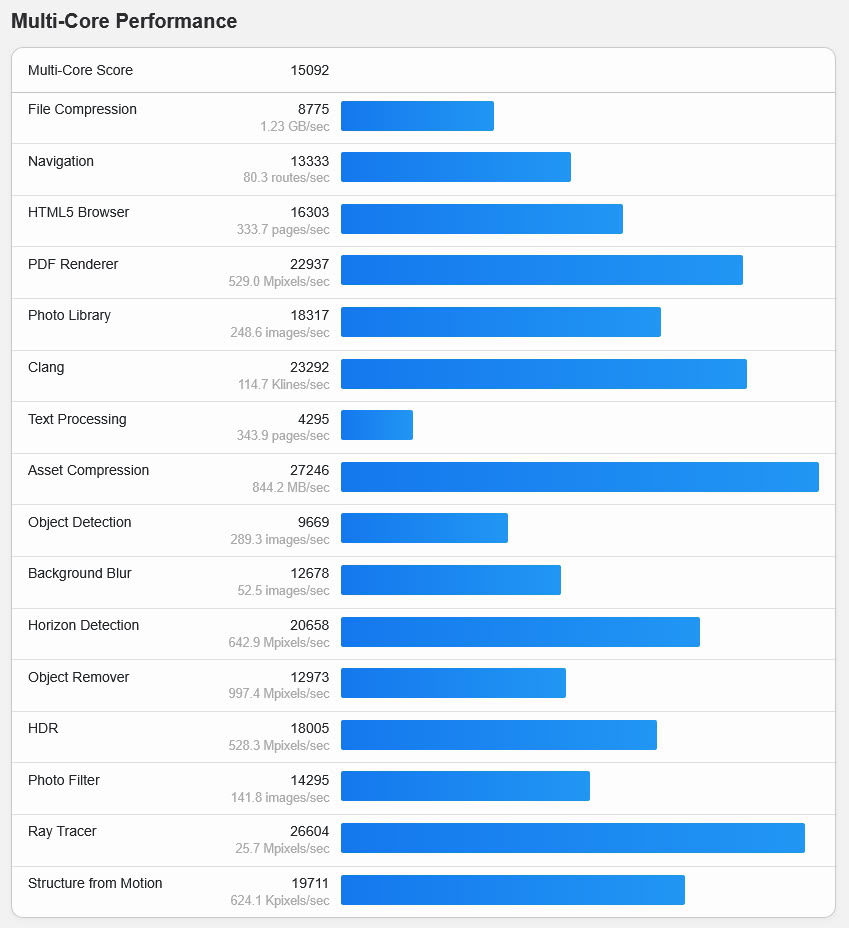
In terms of performance, the Medusa Point APU achieved a single-core score of 3,174 and a multi-core score of 15,092. These results are approximately 29% and 22% higher, respectively, than the average scores for the current Ryzen AI 9 365, which is particularly impressive given the relatively low clock speeds observed in this engineering sample. It’s important to note that early engineering samples typically run at lower frequencies than final retail units, so actual launch performance could be even higher.
Medusa Point Architecture and Features
Previous leaks suggest that the Medusa Point lineup could scale up to 22 CPU cores in the flagship Ryzen 9 variant by combining a 10-core APU die with a 12-core desktop CCD. Integrated graphics are expected to feature eight RDNA 3.5+ (also referred to as RDNA 4m) compute units, maintaining the same GPU configuration despite the increased CPU core count.
A notable addition in this Geekbench entry is the listing of FP16 AVX-VNNI support for the Zen 6 chip, indicating expanded FP16 instruction capabilities in AMD’s upcoming architecture. This enhancement is particularly relevant for artificial intelligence and machine learning workloads, reflecting AMD’s focus on next-generation compute tasks.
What to Expect from AMD Medusa Point
As with all early engineering sample benchmarks, these results should be interpreted with caution. Factors such as clock speeds, firmware, and platform optimization are still under development, and final performance figures may differ significantly at launch.
AMD Medusa Point is anticipated to debut sometime next year, with industry speculation pointing to an initial unveiling at CES 2027 in January. As more information emerges, the Medusa Point APU series is shaping up to be a significant step forward in AMD’s processor roadmap, especially for users interested in advanced AI and high-performance computing.