AMD FSR 4.1 Delivers Impressive Performance Gains on RDNA 3 GPUs
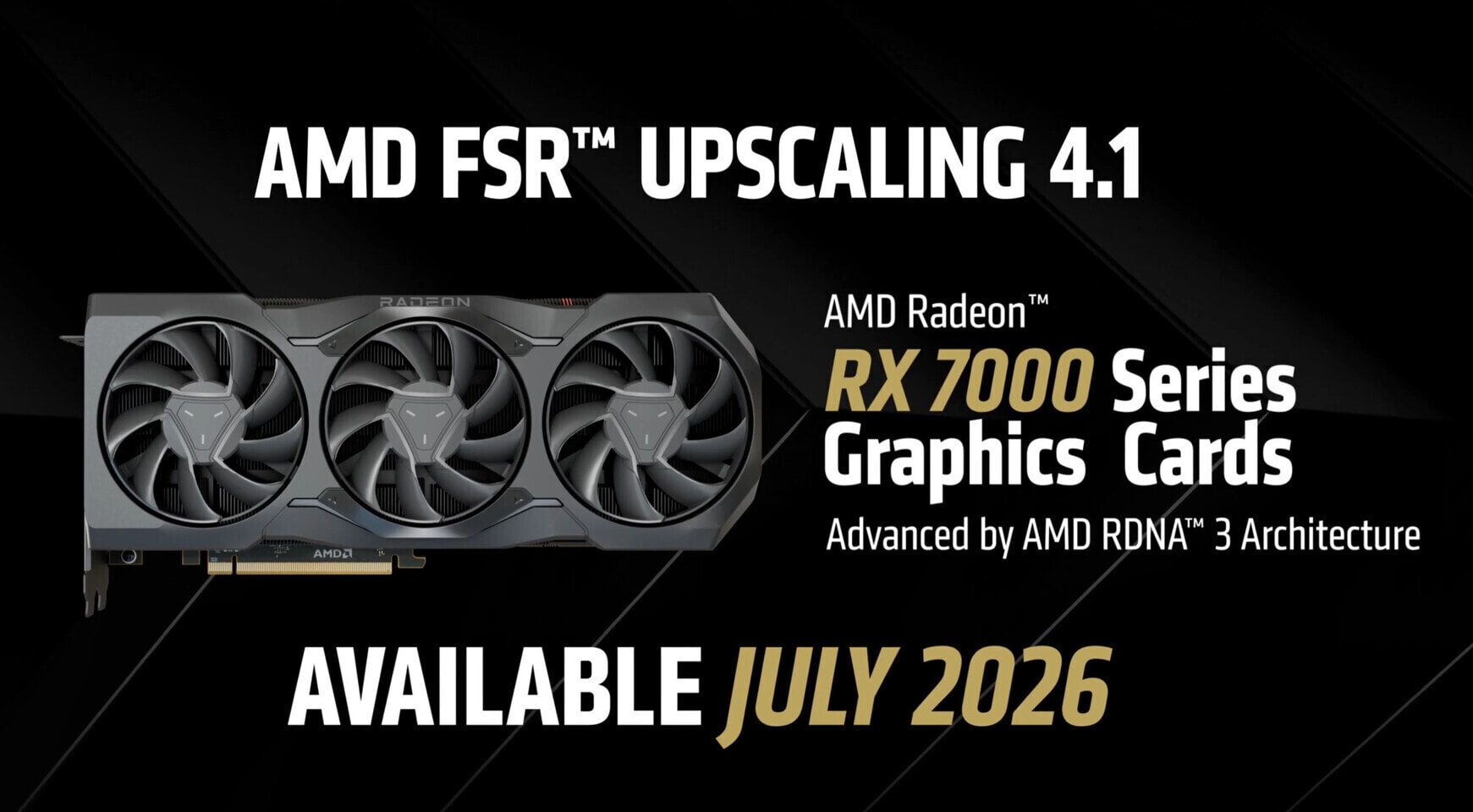
Recent discussions with AMD’s Chief Software Officer and Senior Director of Software highlighted ambitious claims regarding the FidelityFX Super Resolution (FSR) 4.1 update. According to AMD, the latest version of its upscaling technology promises image quality on RDNA 3 graphics cards that matches what users can expect from the upcoming RDNA 4 series, despite architectural differences between the two generations.
Real-World Testing Shows Substantial Performance Boosts
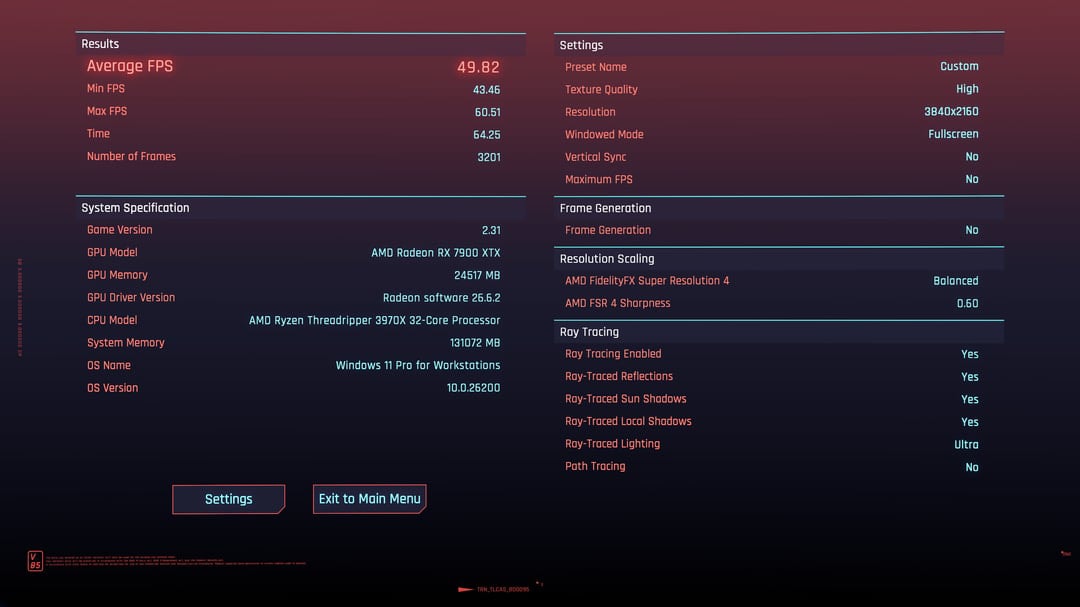
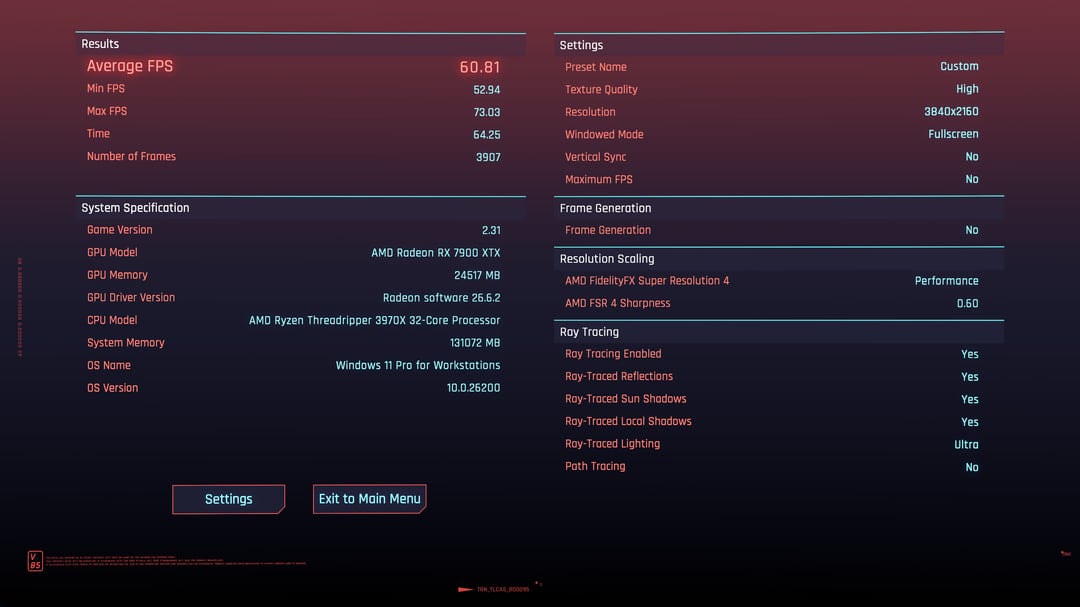
Independent testing shared on the r/radeon subreddit provides early insights into the real-world impact of FSR 4.1. Using an AMD Radeon RX 7900 XTX, the tester ran Cyberpunk 2077 at 3840 × 2160 resolution with high settings, ray tracing enabled, and ray-traced lighting set to Ultra. The results were striking: enabling FSR 4.1 led to performance improvements of up to 100% compared to native rendering.
Benchmark screenshots revealed that with FSR 4 set to Balanced mode, the RX 7900 XTX achieved an average of 49.82 FPS (frames per second), with minimum and maximum values of 43.46 and 60.51 FPS, respectively. Switching to Performance mode, the average frame rate increased to 60.81 FPS, with a minimum of 52.94 FPS and a maximum of 73.03 FPS. The tester also noted that performance jumped from around 24 FPS at native resolution to approximately 50 FPS with FSR 4 Balanced and 61 FPS with FSR 4 Performance.
Test System and Broader Implications
The tests were conducted on a system featuring an AMD Ryzen Threadripper 3970X CPU and 128 GB of RAM running Windows 11 Pro. While this is a high-end workstation setup rather than a typical gaming rig, it demonstrates the potential of FSR 4.1 to significantly boost frame rates even in demanding scenarios. It’s likely that more gaming-focused systems could see even greater benefits as the technology becomes available on a wider range of hardware.
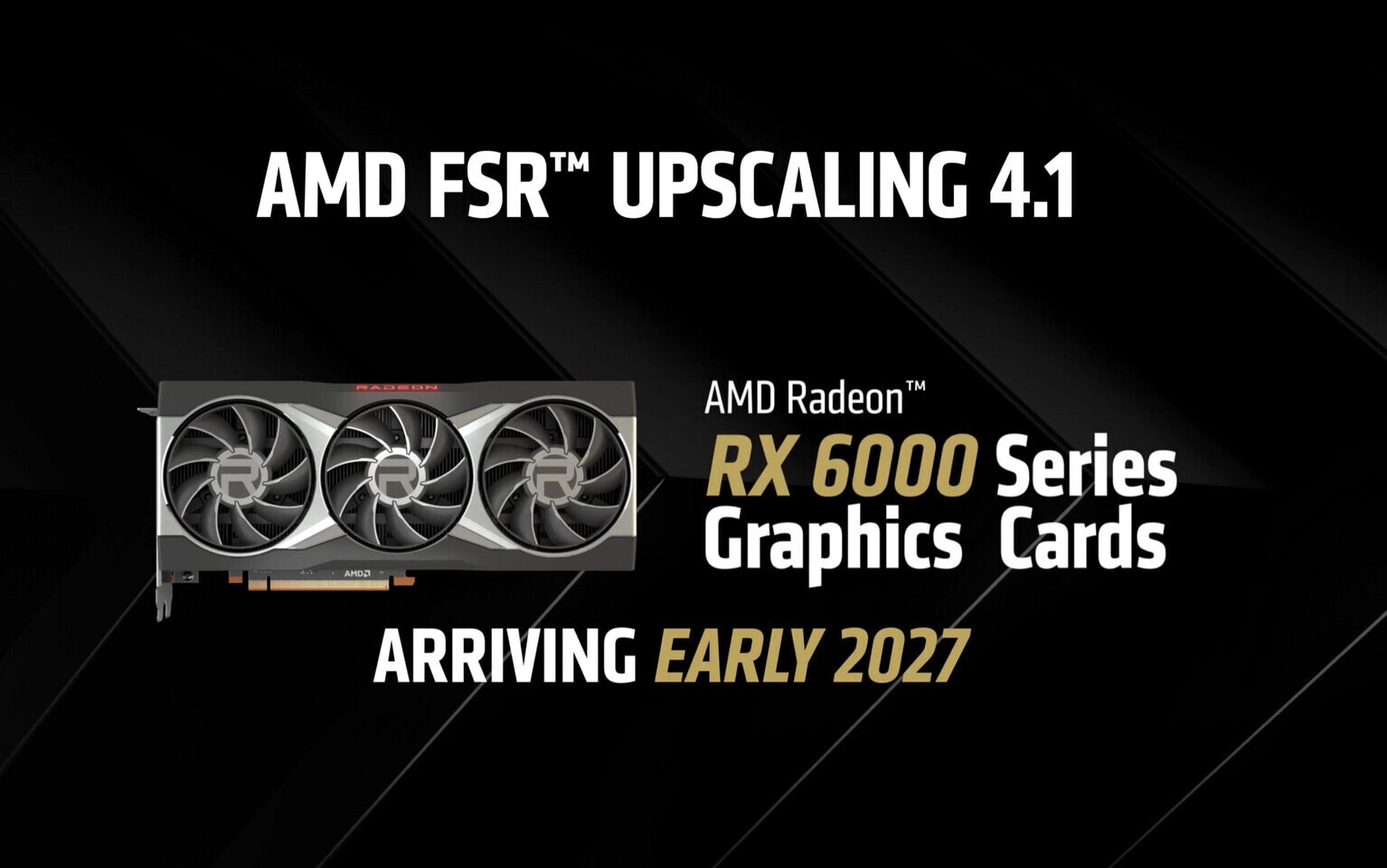
As FSR 4.1 rolls out to older GPUs, further testing across different configurations will help clarify its true performance and image quality advantages. Early results suggest that the technology could be especially valuable for devices with integrated graphics, such as gaming handhelds powered by Radeon 780M iGPUs, where a near-doubling of performance could transform the gaming experience.