Intel Launches Wildcat Lake Core 300 Series for Entry-Level PCs
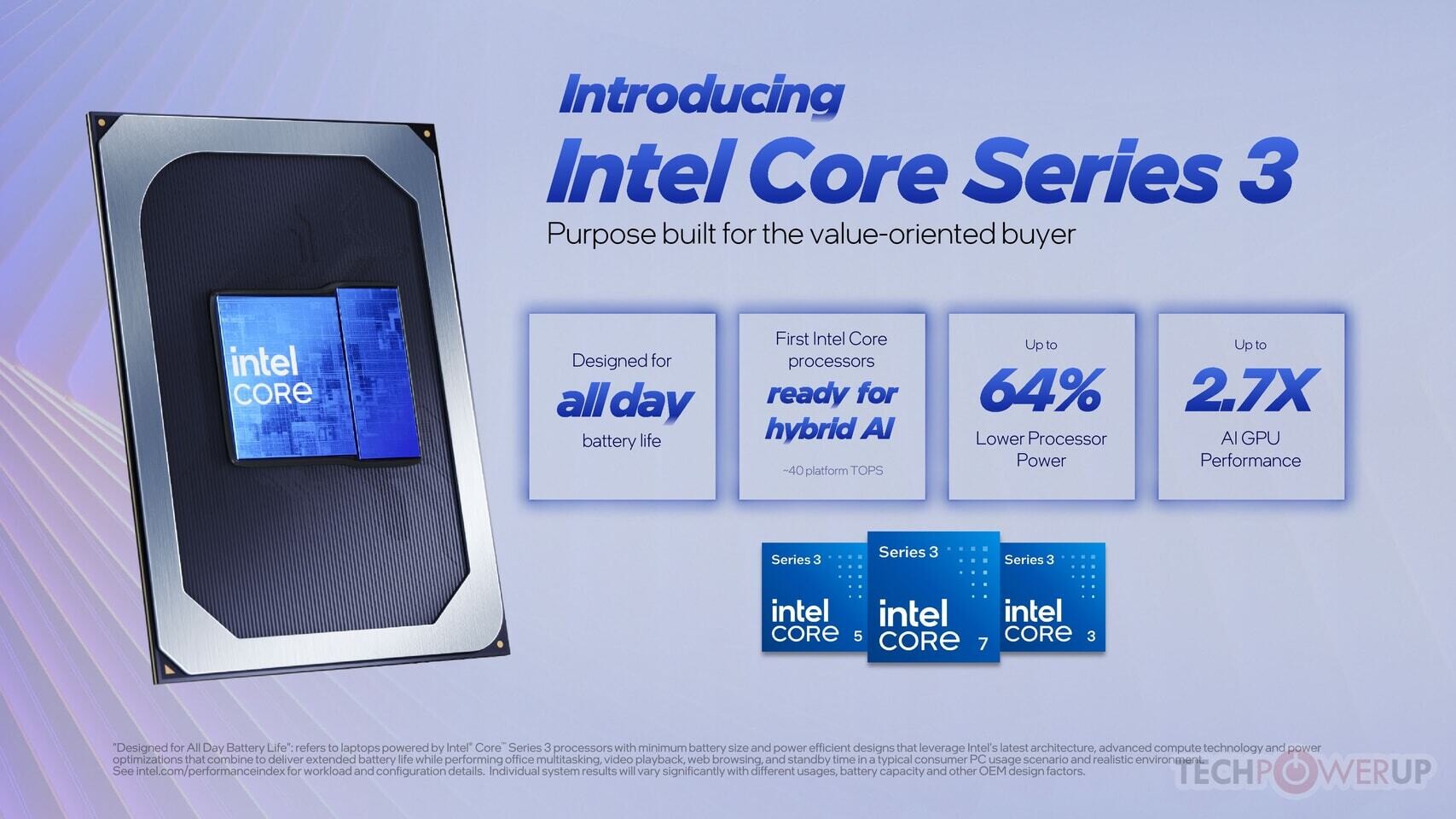
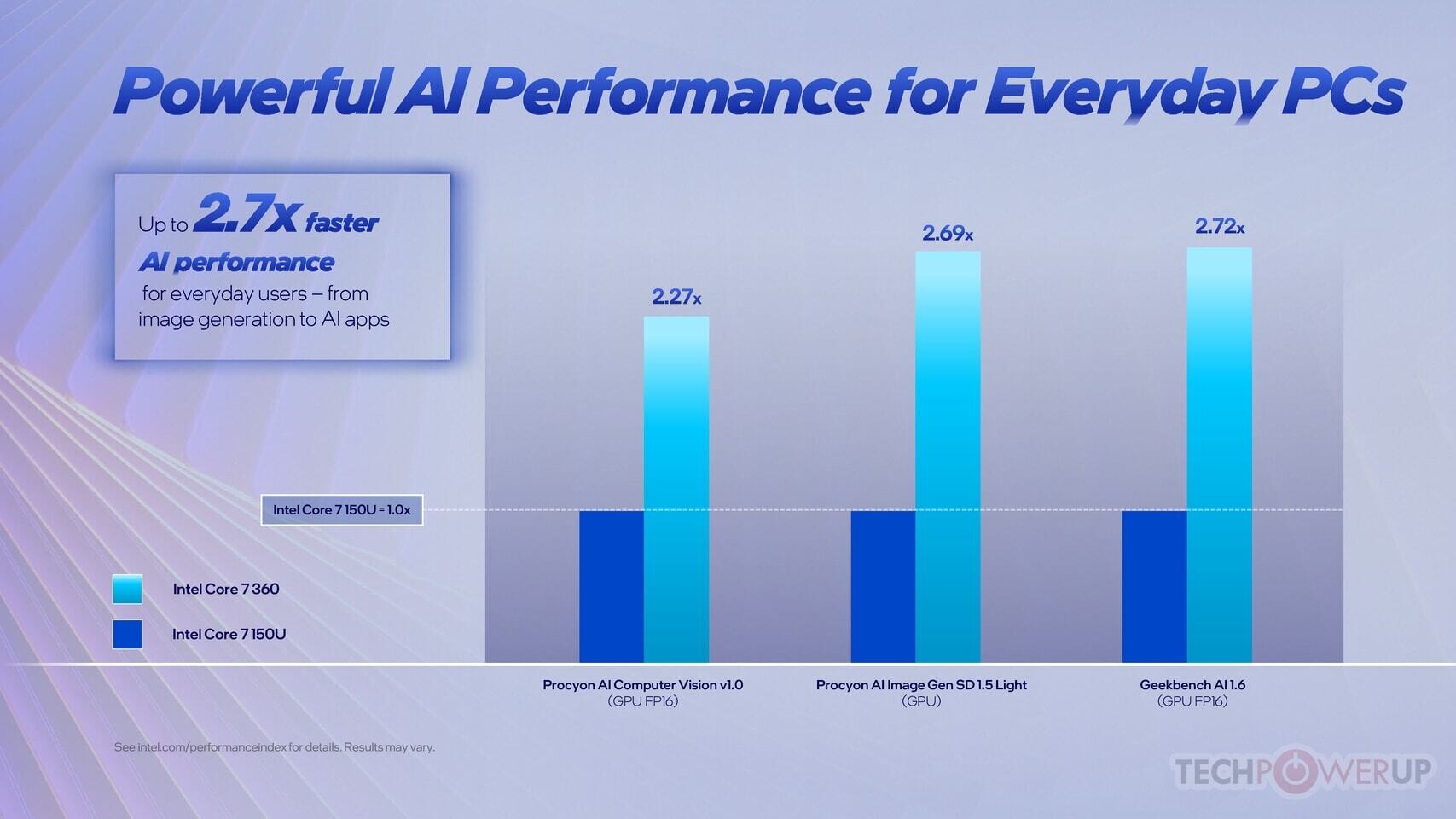
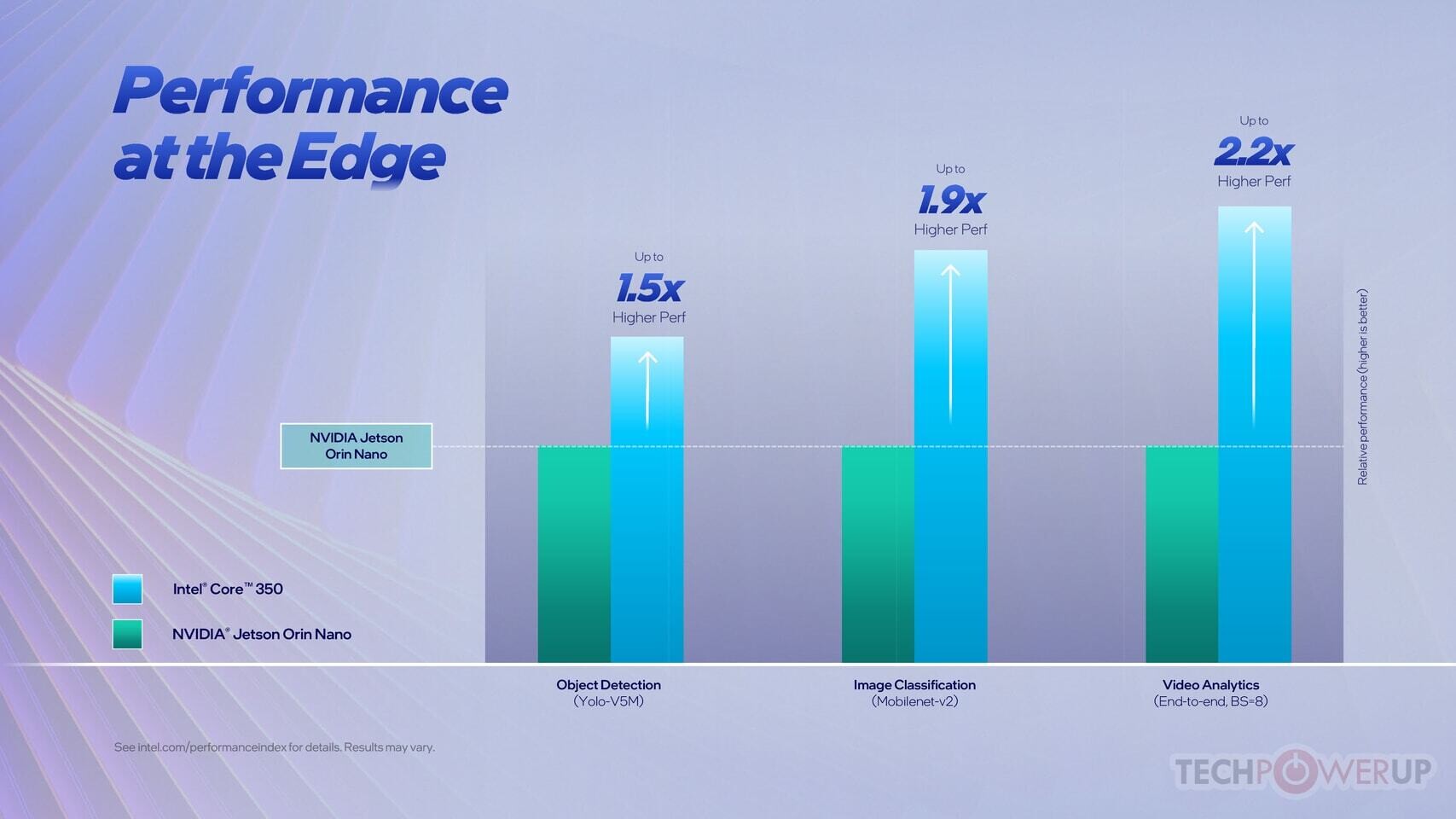
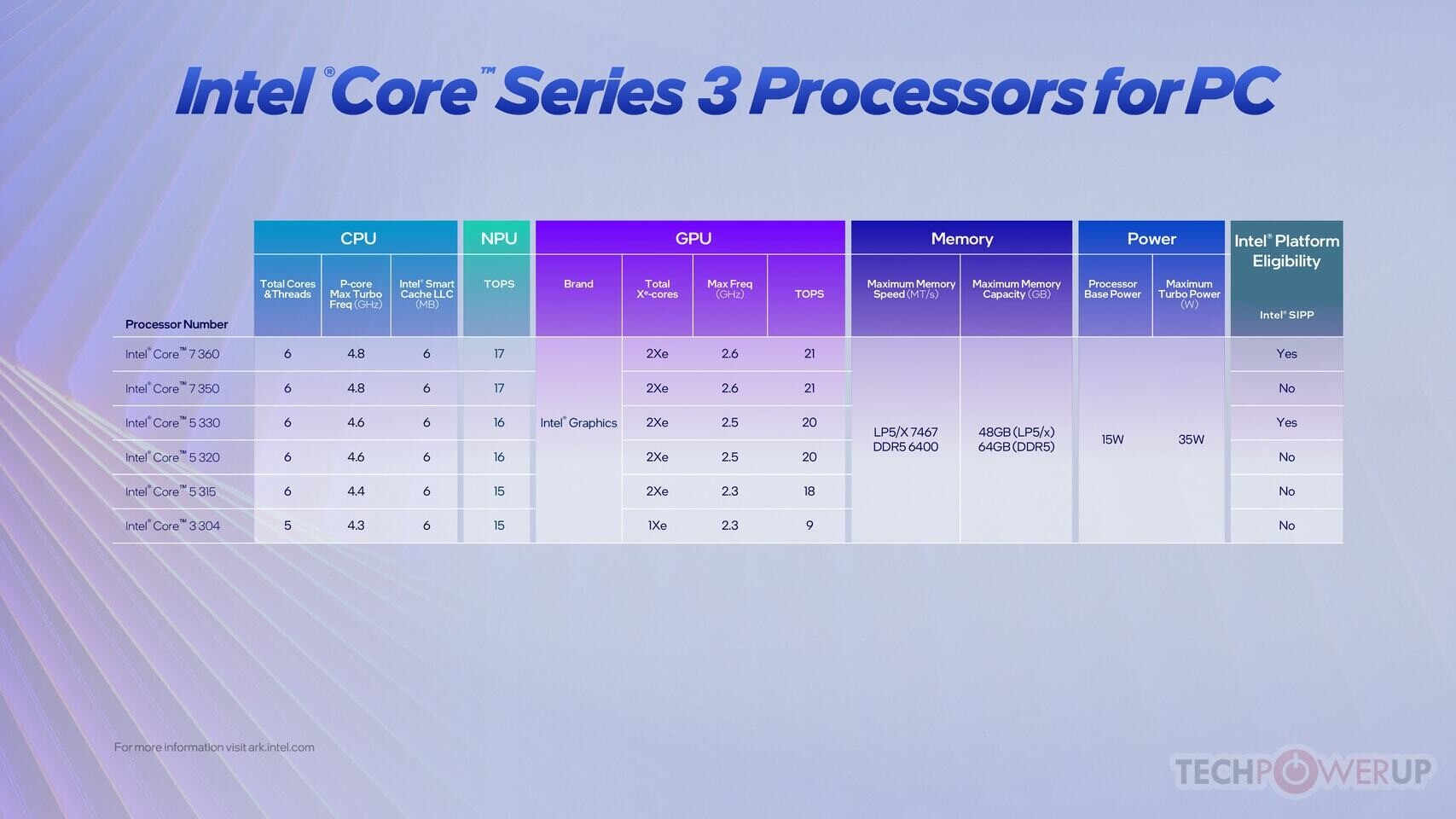
Intel has introduced its new "Wildcat Lake" Core 300 series processors, targeting the entry-level PC market. These CPUs are engineered for users who prioritize value, efficient CPU performance, and essential GPU capabilities, particularly in compact commercial systems and edge AI devices. With an official AI performance rating of 40 TOPS, the Wildcat Lake series meets the requirements for Copilot+ AI PC certification, bringing local AI processing to budget-friendly laptops and desktops.
Key Features and Architecture
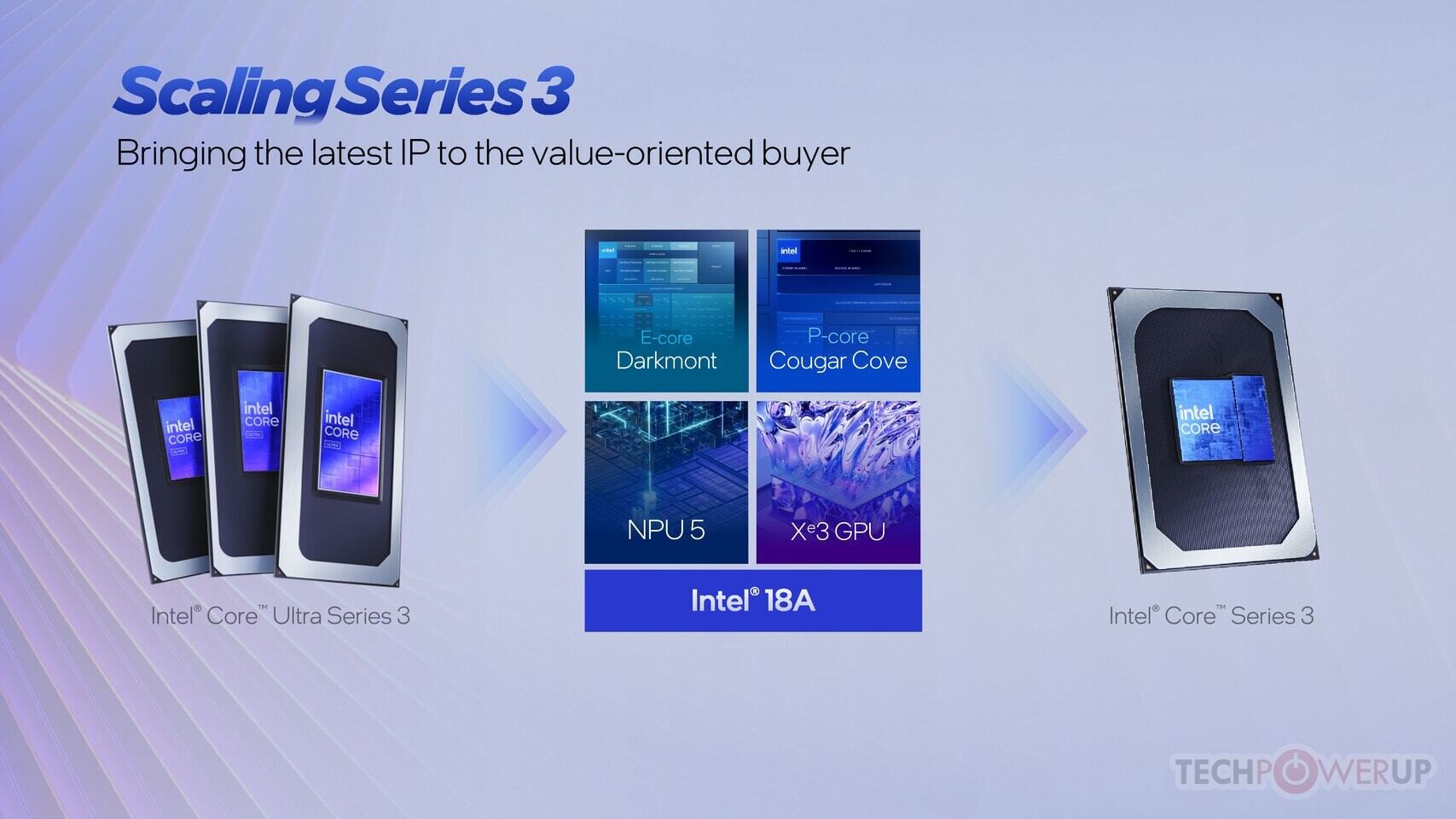
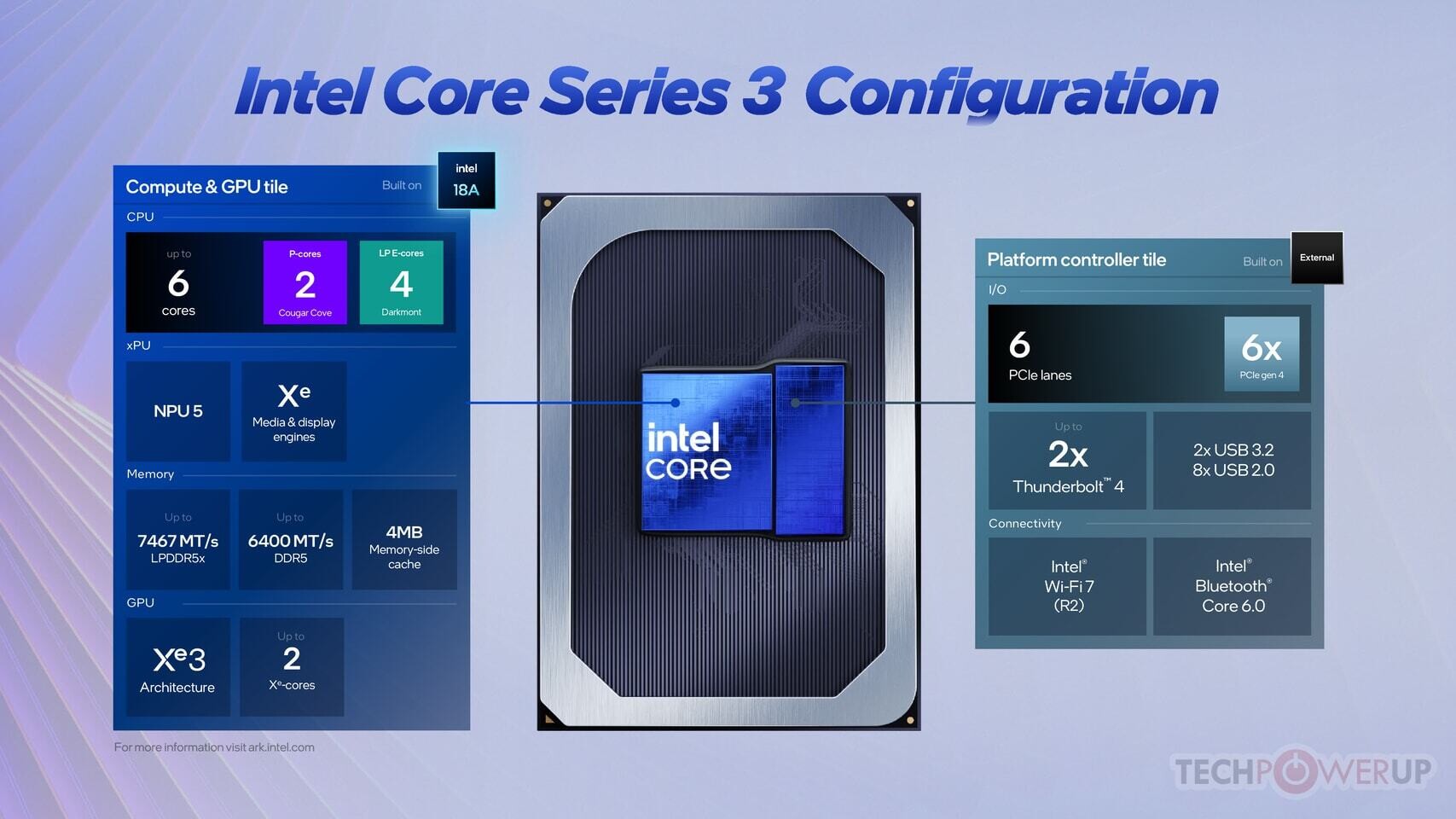
The Core 300 series non-Ultra lineup is designed to deliver all-day battery life alongside integrated AI acceleration. Each processor features a hybrid architecture, combining two high-performance "Cougar Cove" P-cores with four low-power "Darkmont" LPE cores. This configuration balances performance and efficiency, making these chips ideal for lightweight productivity and AI-enhanced tasks.
The Wildcat Lake system-on-chip (SoC) package consists of two distinct dies:
- Primary Compute Die: Manufactured on Intel’s advanced 18A process node, this die houses a 6-core CPU, the NPU 5 AI engine delivering 40 TOPS of INT8 performance, a Xe-based display and media engine, and a GPU with up to two Xe3 cores. The integrated memory controller supports LPDDR5X memory at speeds up to 7,467 MT/s and DDR5 up to 6,400 MT/s. A 4 MB memory-side cache helps buffer data for improved responsiveness.
- I/O Die: Dedicated to connectivity, this die enables support for 6 PCIe Gen 4 lanes, two Thunderbolt 4 ports, two USB 3.2 connectors, and up to eight USB 2.0 ports. Wireless connectivity includes Wi-Fi 7 and Bluetooth 6.0, ensuring modern standards for both speed and compatibility.
Performance and Efficiency Improvements
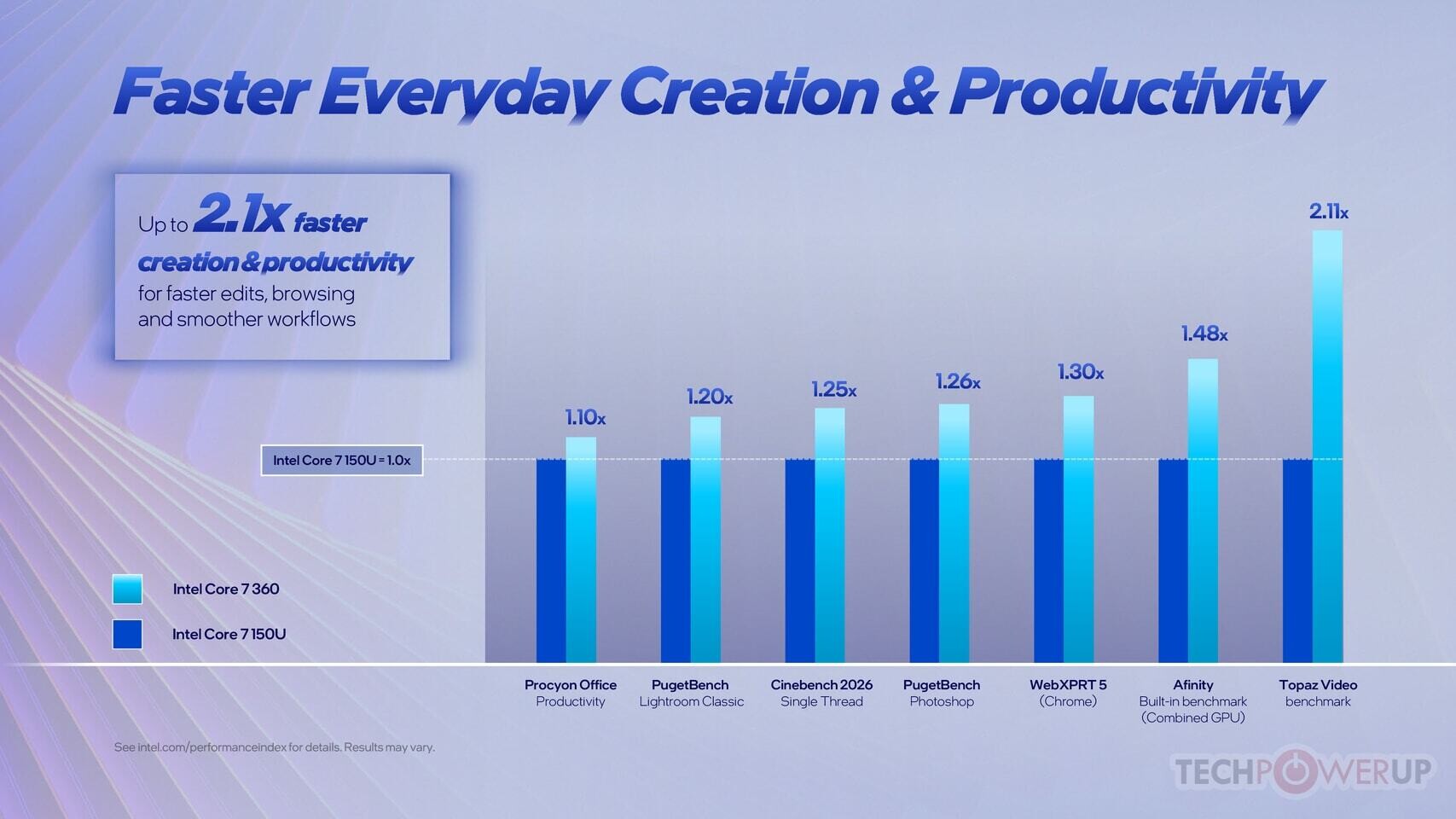
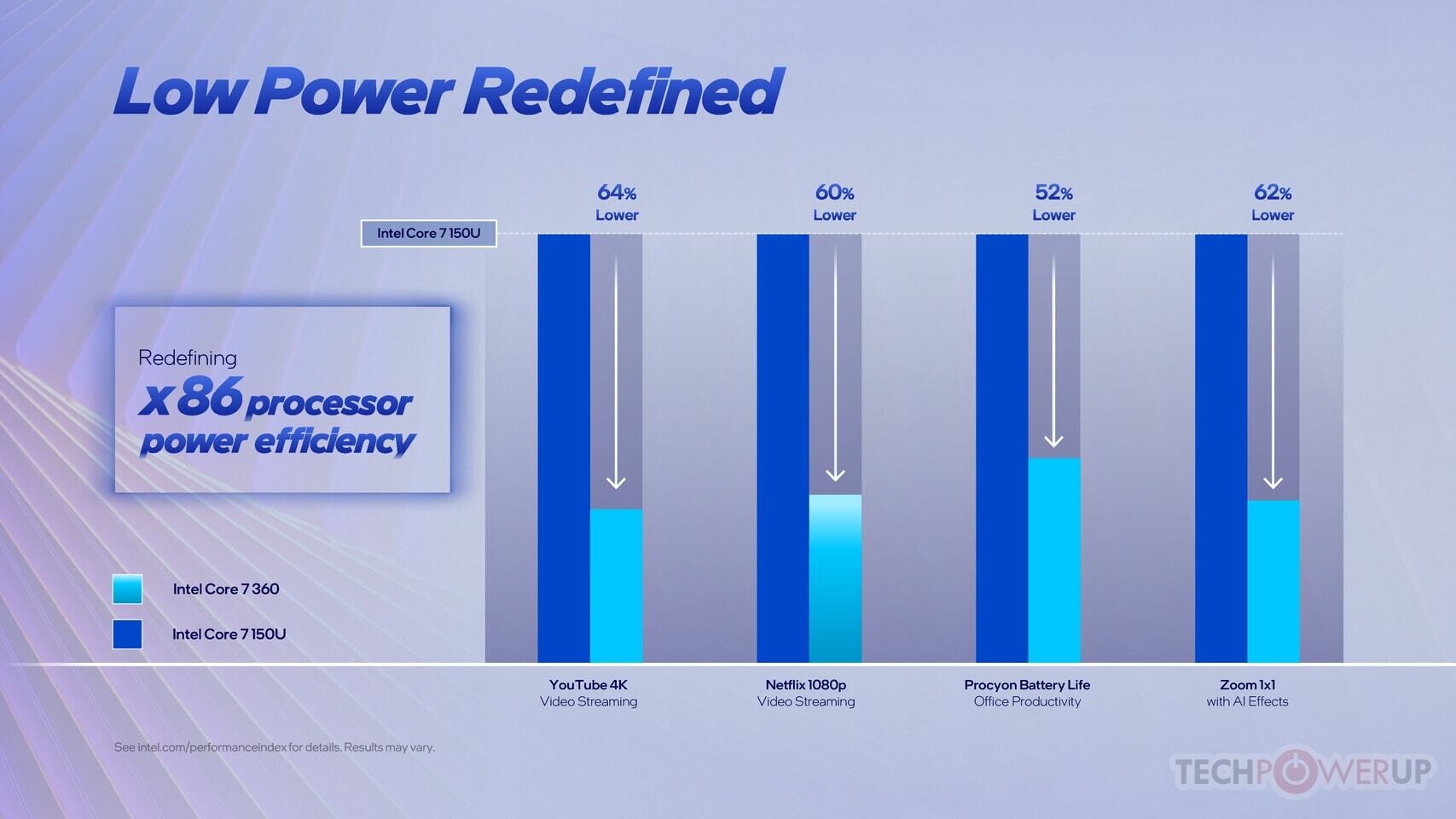
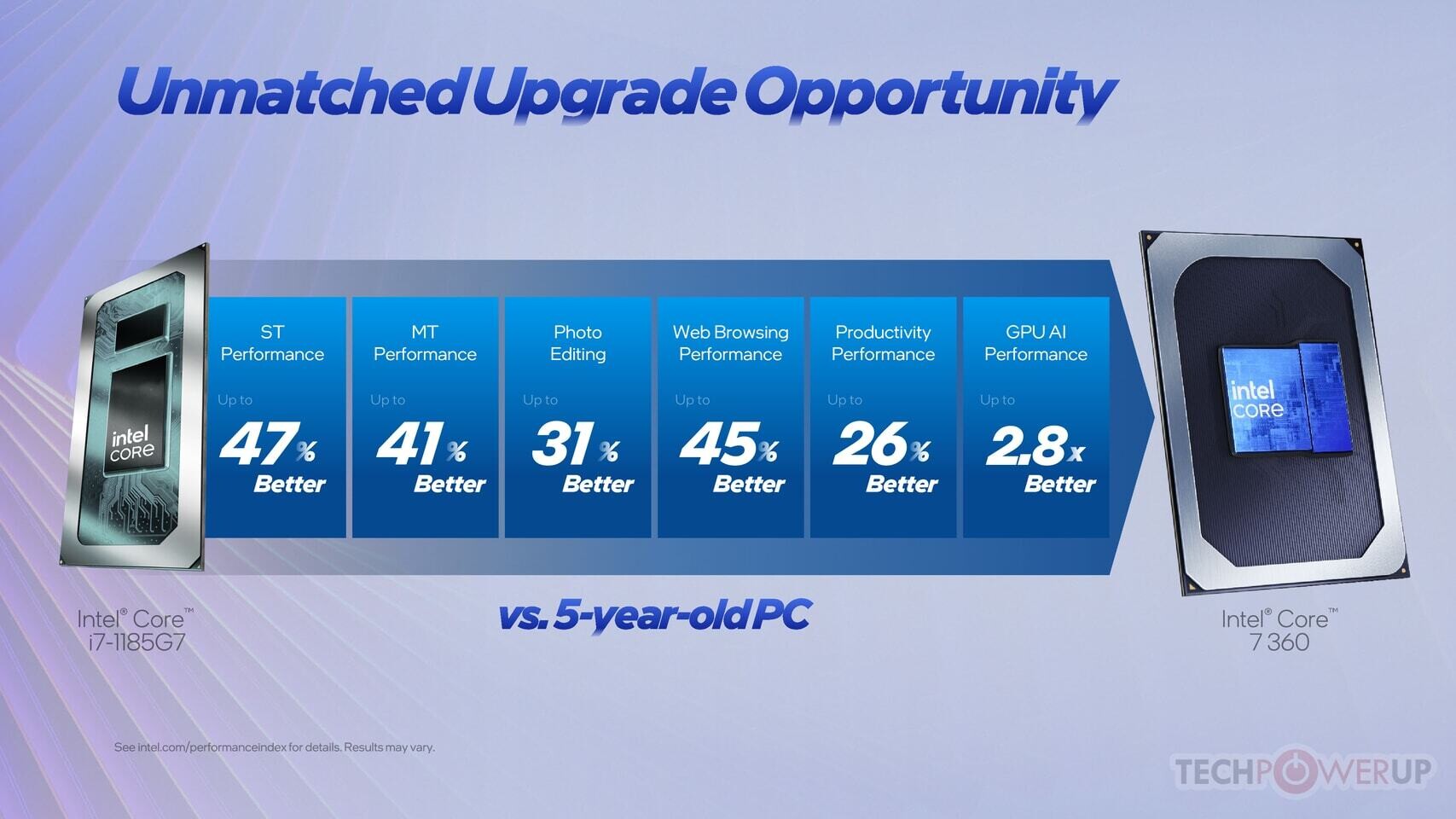
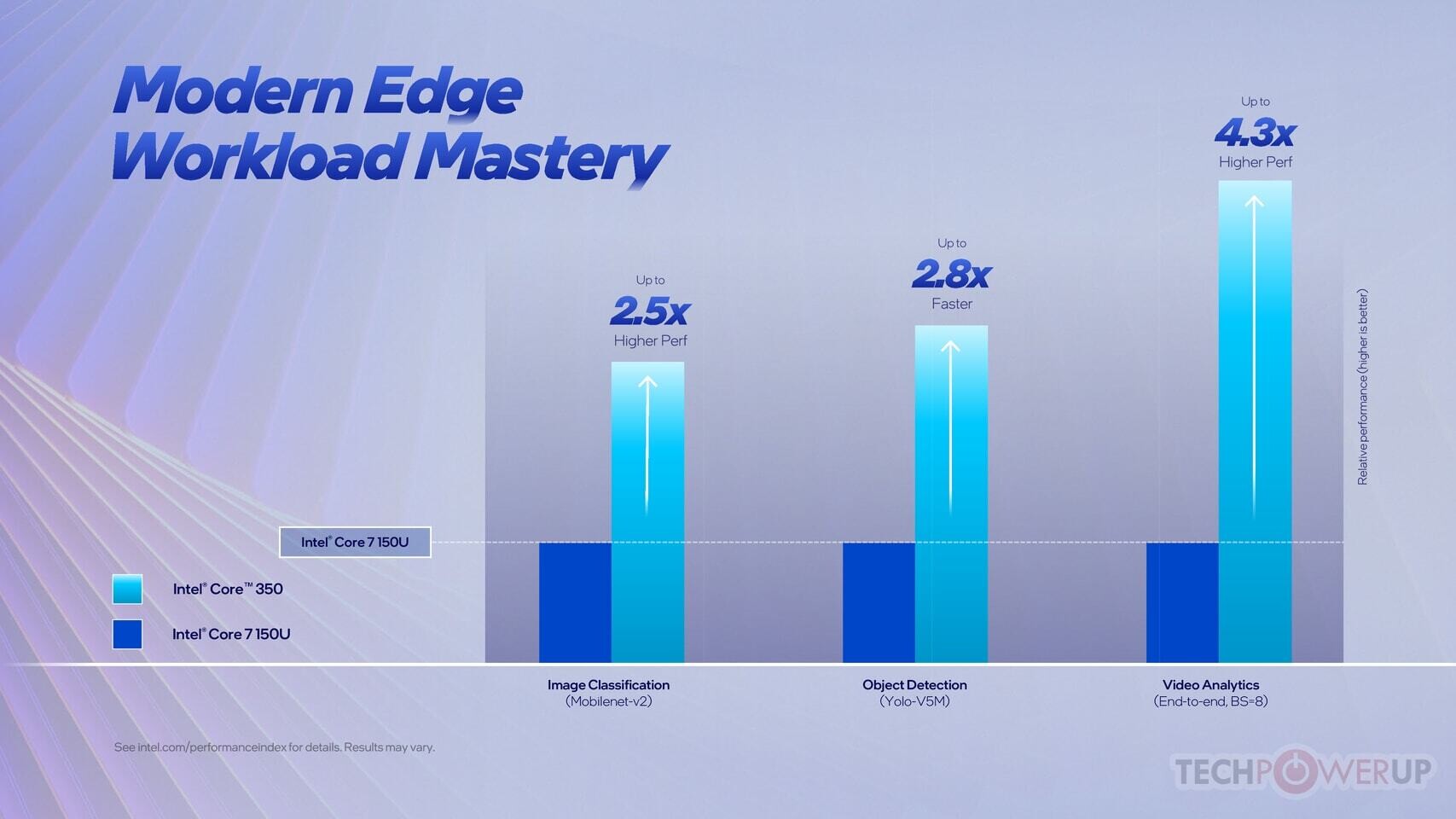
Intel positions Wildcat Lake as a significant upgrade over previous generations, such as the Core 7 150U "Raptor Lake-U" and Core i7-1185G7 "Tiger Lake" processors. Architectural advancements and refined manufacturing processes have resulted in notable gains in both performance and energy efficiency. According to Intel, users can expect up to 18.5 hours of Netflix streaming, 12.5 hours of office productivity, and 9.6 hours of video conferencing with AI enhancements on a single charge.
Competitive Landscape and Market Impact
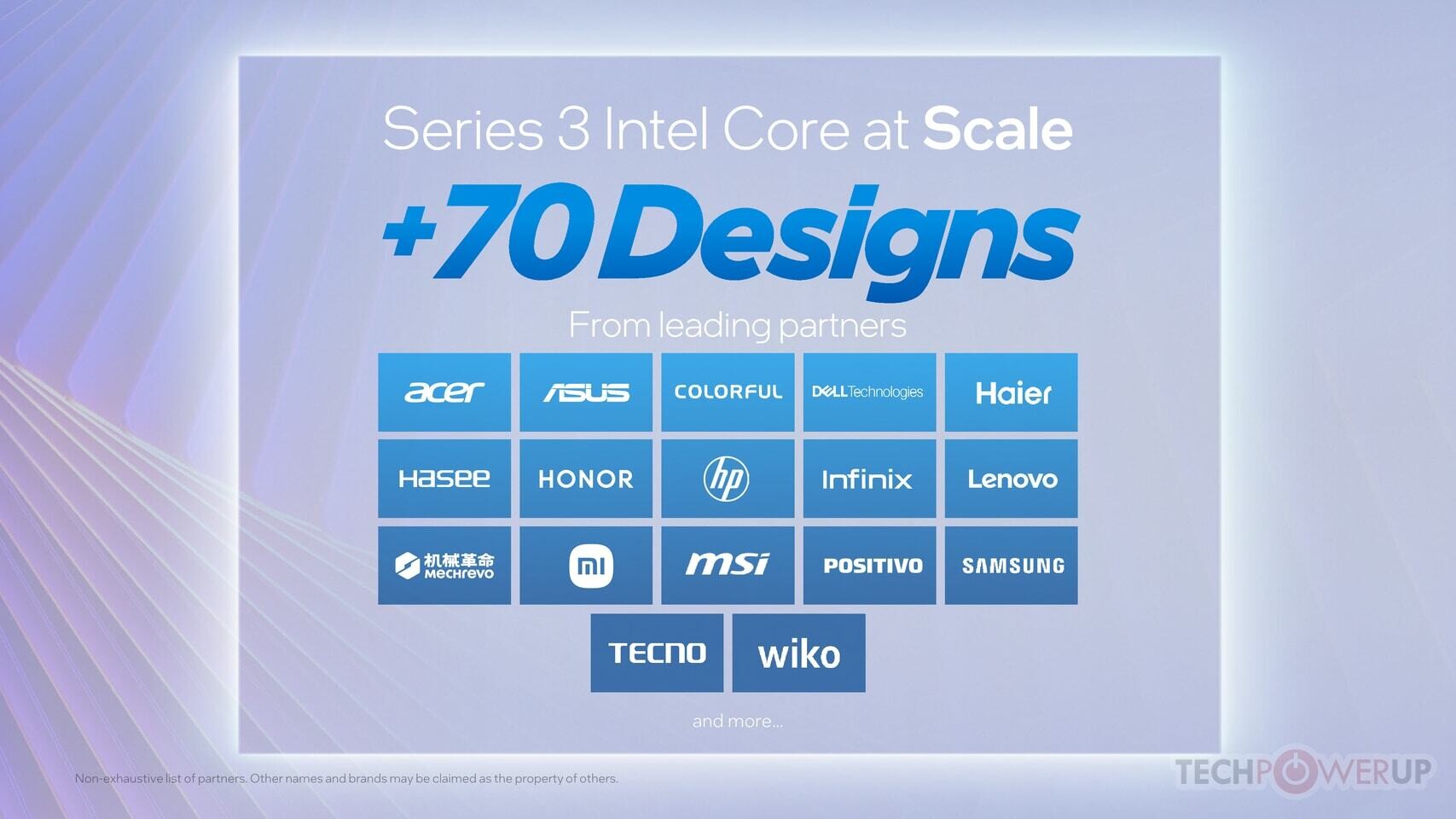
The launch of Wildcat Lake directly challenges recent offerings like Apple’s MacBook Neo, especially as the entry-level laptop segment becomes increasingly competitive. Intel anticipates over 70 new device designs from leading partners, including Acer, ASUS, Dell, HP, Lenovo, MSI, Samsung, Xiaomi, and others. This broad ecosystem support is expected to drive innovation and provide consumers with a wide range of affordable, AI-capable laptops and desktops.
With Apple introducing the $599 MacBook Neo, pricing and configuration will be critical factors for Intel and its OEM partners. If Wildcat Lake systems are competitively priced and equipped with sufficient RAM and SSD storage, they could exert significant pressure on all players in the entry-level PC market.
For users seeking even greater performance, Intel has also highlighted its upcoming "Panther Lake" platform, which leverages the same 18A process technology and efficiency improvements as Wildcat Lake.